Water Damage Restoration in Brandon
A spreading puddle, a ceiling stain or water under flooring needs a clear starting point. Restoration begins with a safe assessment of the source, affected materials and route through the home.
(888) 621-2041Discuss the water inside Water removal before material drying
Make the wet area safe to assess
The first decisions shape the cleanup. Active leaks, electricity and unstable ceilings need attention before belongings move or equipment enters the affected room. Safety comes before saving finishes.
- Stay on dry footing
Water near outlets, powered appliances or a sagging ceiling makes access unsafe. Keep household members away until the hazard receives professional attention.
- Identify the water source
Describe whether water appeared during appliance use, while plumbing was running or after rainfall. A useful account helps separate repair and cleanup needs.
- Preserve a visible record
Photograph affected rooms from a safe position. Capture the water path and damaged belongings before cleanup changes their position or removes wet material.
- Protect accessible dry contents
Move dry belongings only where access remains safe. Keep wet items separate, leaving heavy furniture and anything beside electrical equipment for professional handling.
Different leaks need different cleanup decisions
Choose the page that fits the water's origin or the material now affected. The work may connect several services as inspection follows moisture beyond the first visible patch.
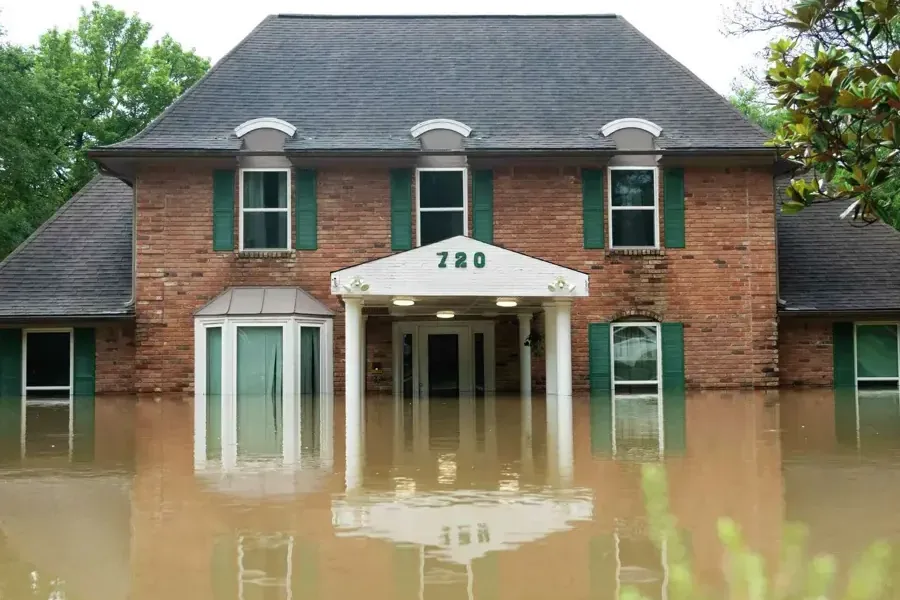 01Storm Flood CleanupOutdoor floodwater brings a different cleaning burden. Reentry conditions, sediment and affected porous contents shape the order of removal and interior recovery.Storm Flood Cleanup
 02Structural Drying & DehumidificationHidden moisture needs measurements over time. Air movement, dehumidification and access to wet assemblies work together until the remaining material meets drying goals.Structural Drying & Dehumidification
03Water Extraction & RemovalStanding water needs a removal method matched to depth, access and contamination. Inspect the remaining damp materials after the puddle disappears from view.Water Extraction & Removal
02Structural Drying & DehumidificationHidden moisture needs measurements over time. Air movement, dehumidification and access to wet assemblies work together until the remaining material meets drying goals.Structural Drying & Dehumidification
03Water Extraction & RemovalStanding water needs a removal method matched to depth, access and contamination. Inspect the remaining damp materials after the puddle disappears from view.Water Extraction & Removal
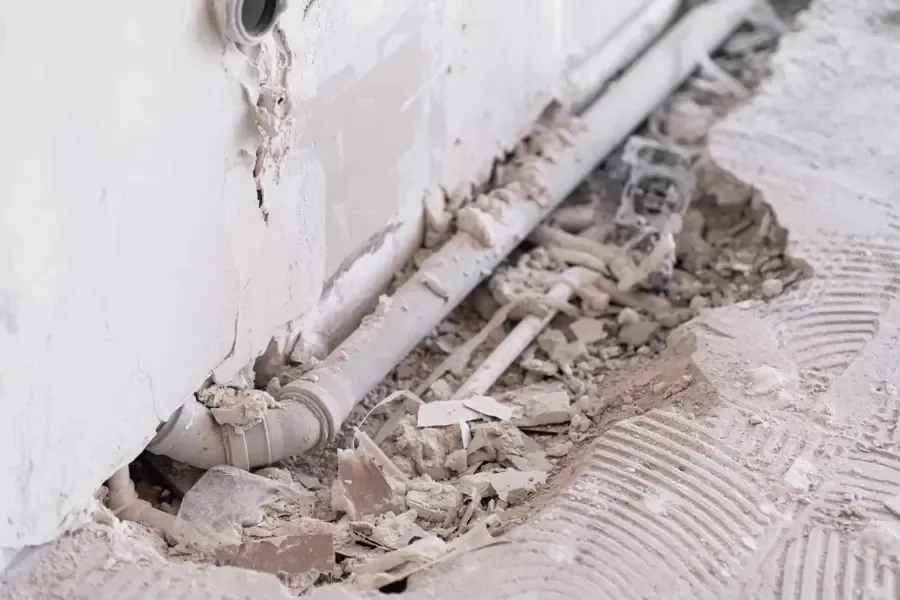 04Slab Leak Water DamageA damp floor can conceal water below its finish. Plumbing diagnosis and moisture mapping establish where access is useful before flooring is opened.Slab Leak Water Damage
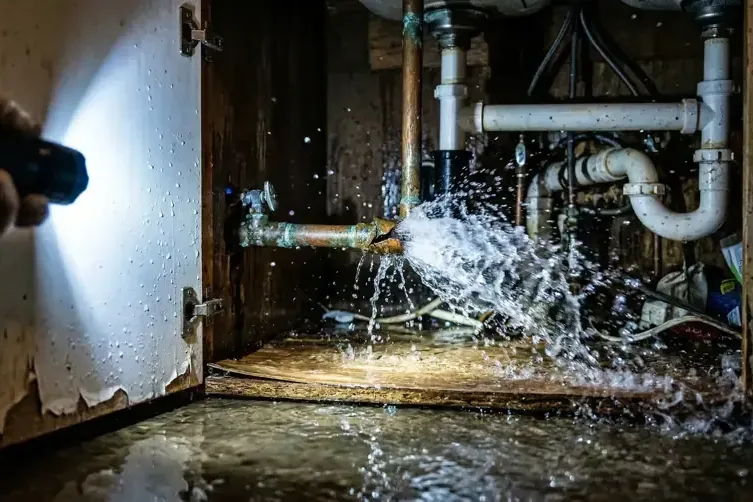 05Burst Pipe CleanupA broken supply pipe can keep feeding nearby rooms. Source isolation must accompany extraction so water removal does not chase an active discharge.Burst Pipe Cleanup
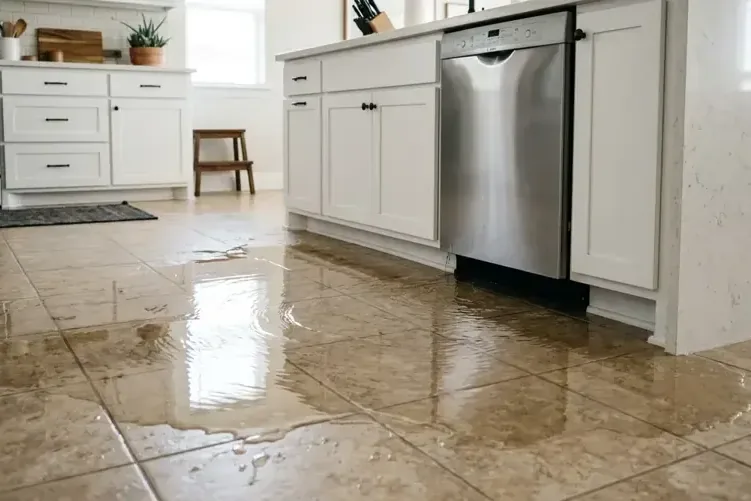 06Appliance Leak CleanupA leaking dishwasher or washer can wet cabinet bases and concealed floor edges. The discharged water's origin helps determine which materials remain usable.Appliance Leak Cleanup
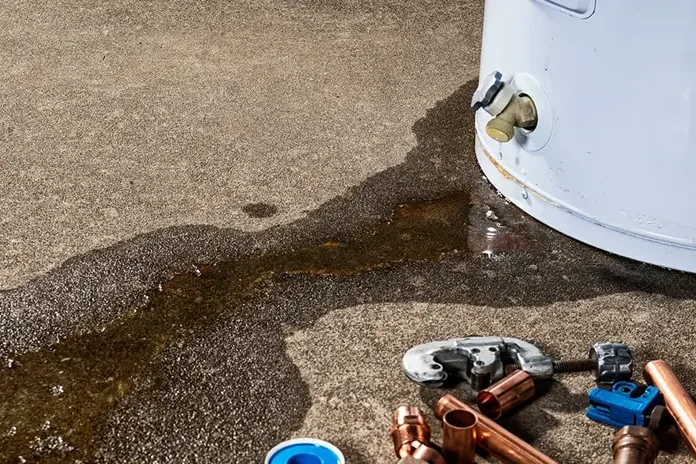 07Water Heater Leak CleanupEscaped tank water may reach beyond a utility space. Trace its route through doorways and along wall bases before setting up the drying area.Water Heater Leak Cleanup
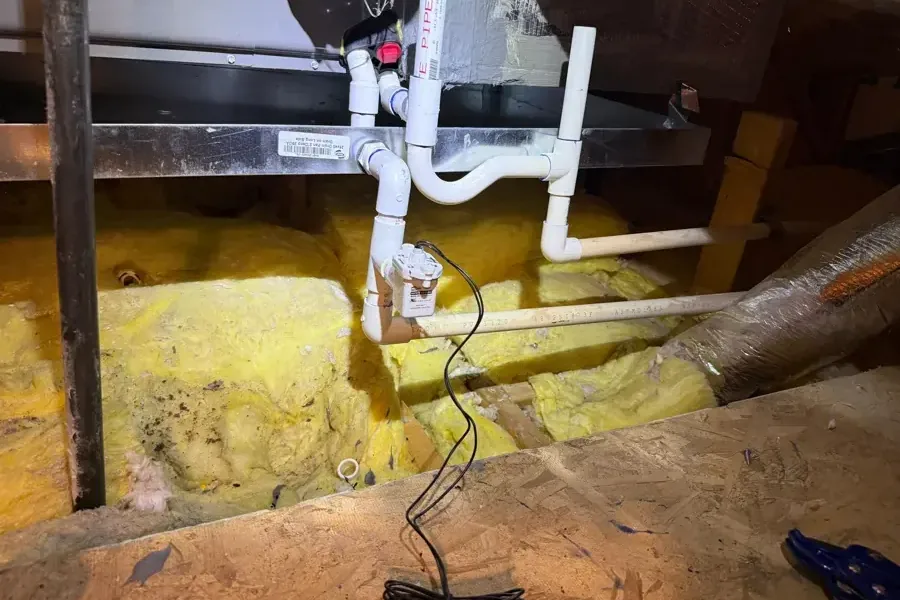 08AC Condensate Leak DamageAn overflowing condensate drain can soak insulation above an occupied room. Correcting drainage and drying the building are separate parts of the response.AC Condensate Leak Damage
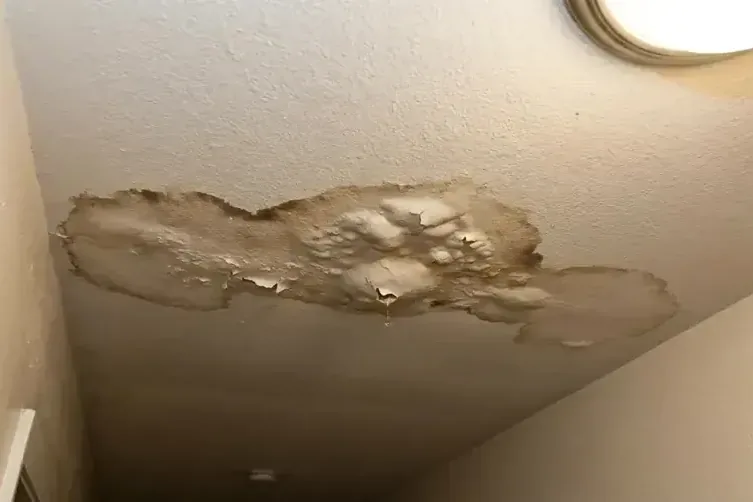 09Ceiling Leak Water DamageBubbling paint and softened overhead board call for careful access. Inspection follows moisture toward its origin while protecting the room beneath damaged finishes.Ceiling Leak Water Damage
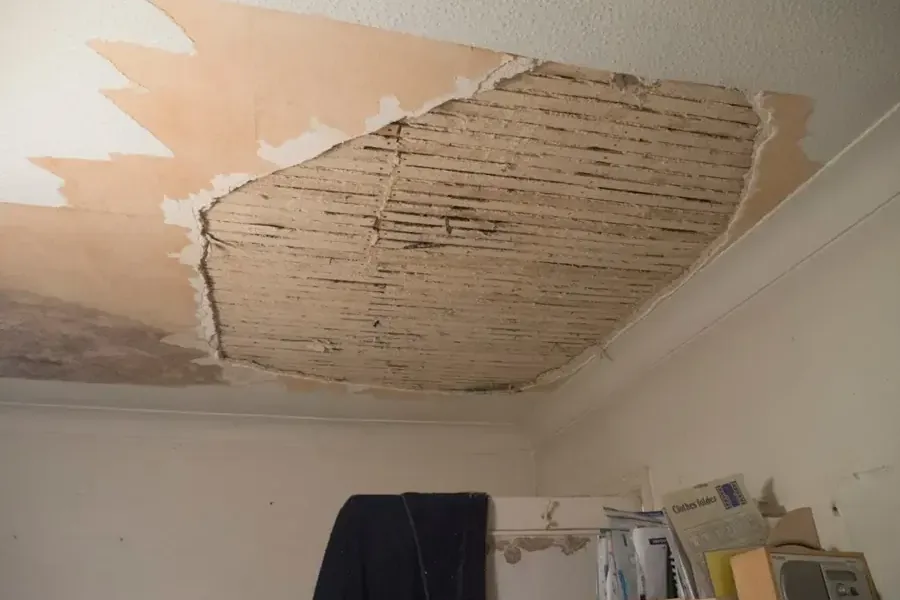 10Roof Leak Water DamageRain entering overhead may travel along framing before showing indoors. Roof repair coordination keeps interior drying from being undone by another rainfall.Roof Leak Water Damage
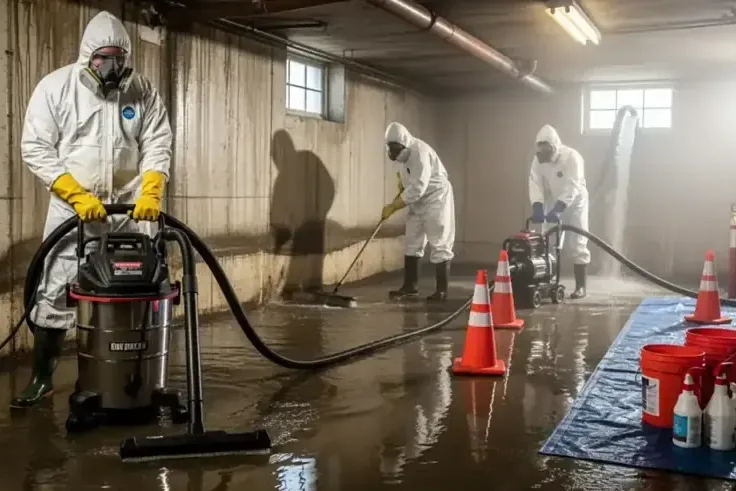 11Sewage Backup CleanupWastewater requires restricted access and protective handling. Contaminated porous finishes need assessment before cleaning exposed surfaces and beginning controlled drying of retained materials.Sewage Backup Cleanup
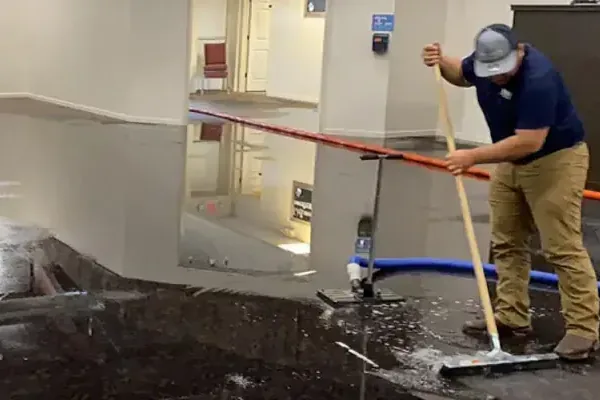 12Commercial Water DamageBusiness recovery depends on access, affected equipment and room priorities. A written mitigation scope helps occupants coordinate work around isolated wet areas safely.Commercial Water Damage
Track what is wet and what changes
A useful restoration plan links the visible loss with readings from adjoining materials. Each stage leaves a record, so drying decisions follow the building's condition rather than appearance alone.
- 1
Define the affected footprint
Inspection records the source account, water condition and moisture locations. Nearby dry materials provide comparison points for the assemblies involved in this particular loss.
- 2
Create workable access
Extraction removes reachable water while careful contents handling clears the work area. Unsalvageable finishes are identified before selective removal exposes concealed wet surfaces.
- 3
Control the drying environment
Equipment placement directs air across accessible damp materials. Dehumidifiers collect released moisture while readings reveal whether enclosed layers need a different approach.
- 4
Document the handoff
Final checks compare retained materials with the drying target. The record separates completed mitigation from remaining plumbing, roofing or finish repairs at the property.
Tools serving a specific purpose
- Moisture meters compare damp assemblies with dry references.
- Extraction equipment removes liquid before evaporation becomes the main task.
- Air movers carry surface moisture into the controlled drying air.
- Dehumidifiers collect airborne moisture released from accessible building materials.
- Protective barriers separate work activity from adjoining usable spaces.
Readings determine the next stage Drying duration depends on how deeply water entered materials, which surfaces are accessible and whether the source stays controlled. Repeated measurements support a sensible handoff instead of a promised completion date.
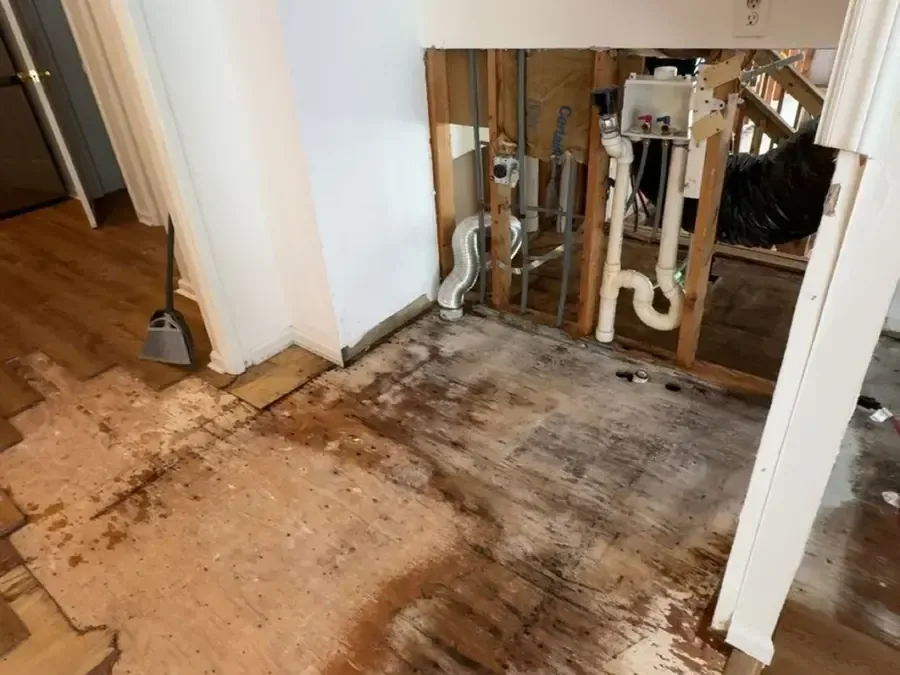
A small wet patch can hide spread
- A floor that feels damp again after wiping deserves a wider inspection. Water may have travelled beneath a finish before emerging beside a wall or cabinet.
- In Hill-Dale Heights, inspection follows the materials at the property. Moisture readings across the floor and adjoining wall bases help define the area that needs further access.
- Concealed floor moisture assessment connects plumbing diagnosis with the materials needing attention. Openings should serve a clear inspection, removal or drying purpose at the affected location.
What changes water damage costs in Brandon?
The amount of wet material matters more than the size of the visible puddle. Cleanup pricing reflects water condition, extraction access, necessary removal and drying effort. A written assessment should explain those tasks before the work proceeds.
An accessible escape with prompt source control generally involves fewer affected finishes, less contents handling and a smaller drying footprint.
$1,000 to $3,000Moisture underneath flooring or inside walls adds inspection points, selective access, equipment placement and further monitoring of the retained assemblies.
$3,000 to $7,000Widespread saturation, difficult removal and contaminated contents require a property assessment to define cleaning, disposal and the sequence of work.
$7,000 to $10,000+These planning ranges describe mitigation rather than a fixed property quote. The cost calculator helps organize questions about affected rooms and materials.
The source changes material handling
Category 1: sanitary origin
Water released from a sanitary source still requires prompt removal and assessment. Contact with building materials, elapsed time and changing conditions affect the cleanup decisions at the property.
Category 2: contaminated discharge
Used appliance water can contain substances that change handling requirements. Inspection considers the discharge itself and the surfaces it contacted before deciding how exposed materials should be cleaned.
Category 3: highly contaminated water
Sewage and outdoor floodwater require protective procedures. Affected porous finishes may need removal, with exposed retained surfaces cleaned before the building moves into its structural drying stage.
Find the appropriate cleanupDocument the cause and the work
Photographs and a clear sequence of events help explain the loss. Keep the cleanup scope, equipment notes and repair records together so questions about the affected building can be answered consistently.
- Photograph the source area and visible water path from safe positions.
- Record when the damage appeared and whether water continued entering afterward.
- Keep separate descriptions for emergency mitigation and the source repair work.
- Retain invoices, material readings and records of belongings removed during cleanup.
Flood coverage deserves a separate check
Hillsborough County warns that most homeowner insurance policies do not cover flood damage. Outdoor water entry should be described accurately when discussing the loss and policy with an insurer.
Coverage decisions depend on the actual policy and loss circumstances. The insurer can explain applicable terms, documentation requirements and any remaining questions.
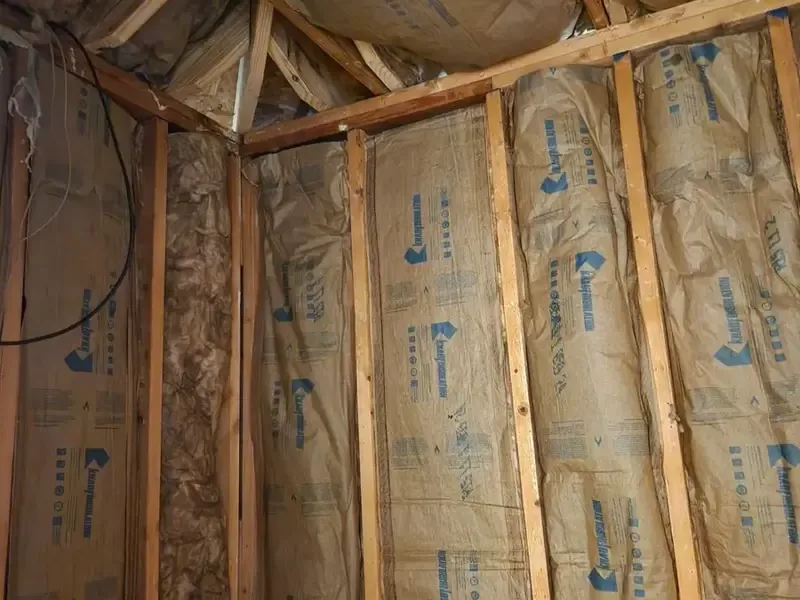
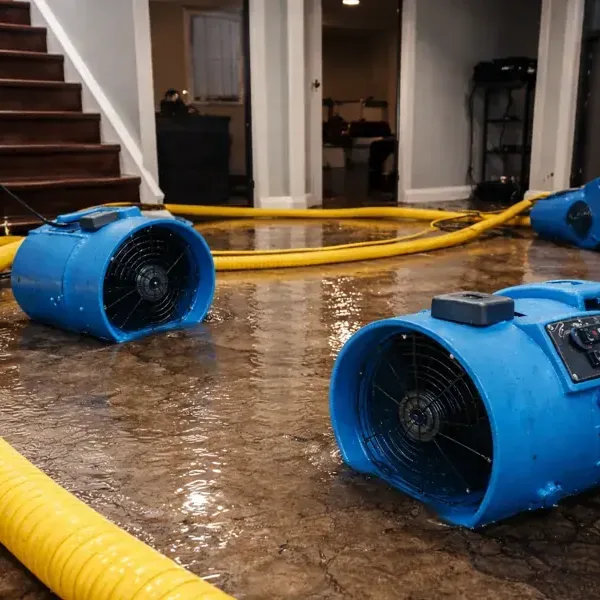
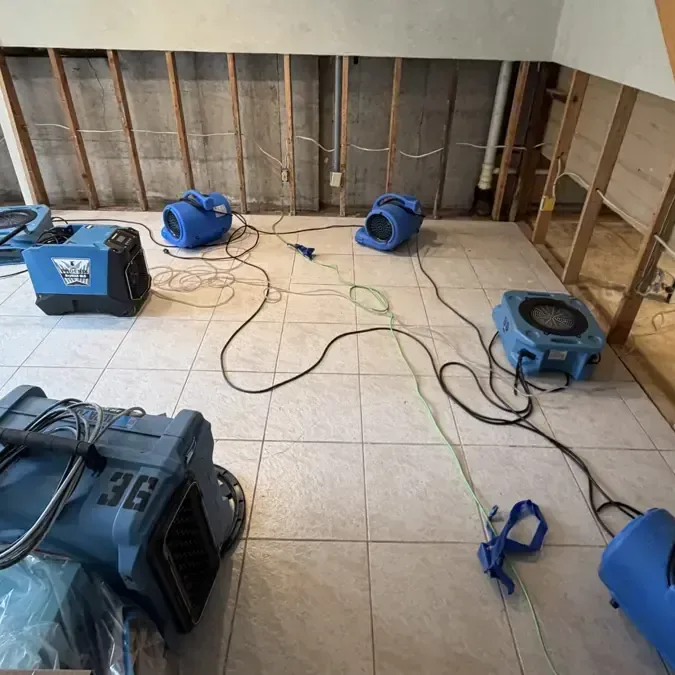
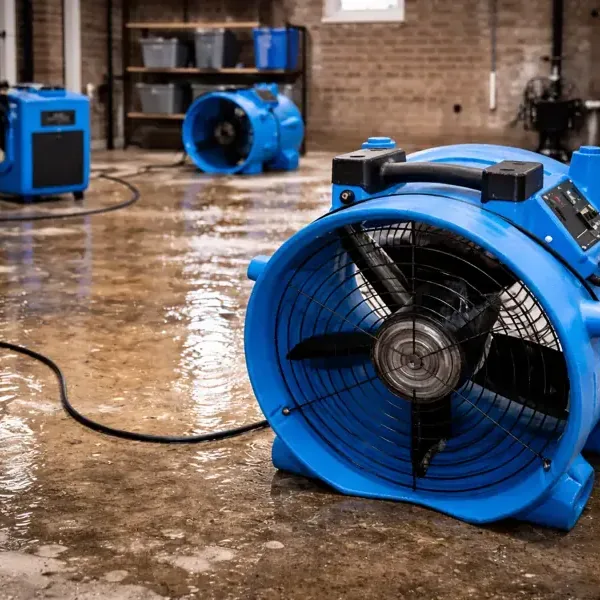
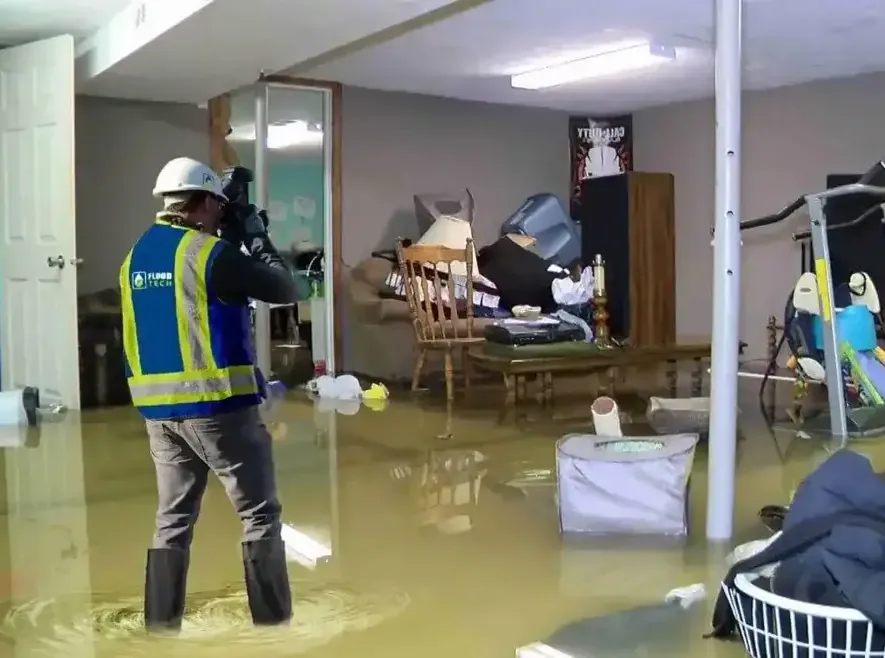
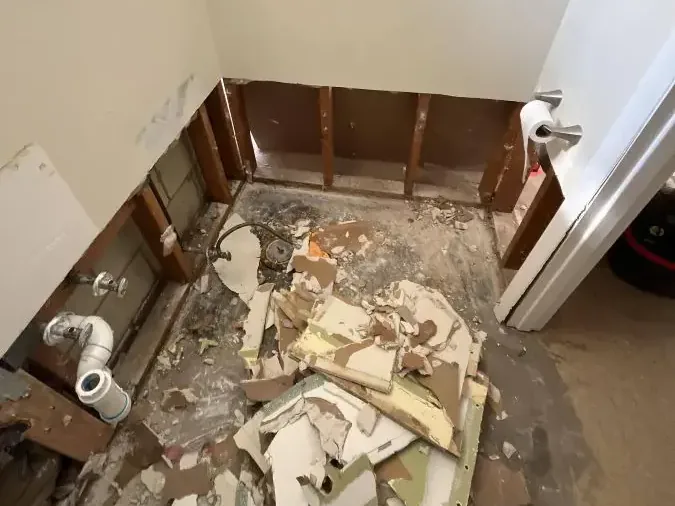
Visible tasks from extraction through drying
Neighborhoods and familiar places around the community
Brandon is an unincorporated community in Hillsborough County. Requests can identify the neighborhood, nearest familiar corridor and affected room, helping describe the property situation without confusing the water source with its location.
- Limona
- La Viva
- Brandon Hills
- Kensington Estates
- Barrington Oaks East
- Hill-Dale Heights
- 33510
- 33511
Seffner Water Damage Restoration · Brandon, FL
Find us on GooglePlan before you call
Nearby service areas
Water damage questions, explained
Drying a Brandon Home After Water Recedes
Brandon flood recovery continues after outdoor water recedes. See how material checks, drying access and clear repair records shape the next steps indoors.
Valrico Appliance Leaks and Unexplained Water Use
Valrico appliance water problems can involve a wet floor or unexplained consumption. Use county leak tips to organize observations and plan material cleanup.
Temple Terrace Pipe Leaks and Water Meter Checks
Temple Terrace water use concerns and wet rooms need a coordinated response. Learn which observations help utility staff, plumbers and the water cleanup crew.
Rain outside and moisture inside need separation
The community's humid subtropical climate makes interior humidity part of drying assessment. Around Mead Lake and Timber Pond, past street flooding also illustrates why outdoor conditions deserve attention before entry and cleanup decisions.
- Extended rainfall: September 10, 2018: Reported flooding near the lakes followed extended rainfall that raised connected water levels, according to Hillsborough County's explanation.
- Changing drainage conditions: Temporary pumping in that account depended on downstream levels. Safe access needs an assessment of current surroundings before people enter a flooded property.
- Long hot summers: Cooling equipment collects condensate during operation. An indoor overflow needs drainage repair alongside assessment of wet insulation, ceilings or nearby wall materials.
- Hidden indoor travel: Water follows openings between rooms and finishes. A stain's position may differ from the source, making inspection beyond the visible mark useful.
Questions before restoration starts
What should happen while a pipe still leaks?
Source control comes first alongside safe access. An accessible shutoff may limit continued discharge, but water near electrical equipment requires professional attention. Extraction is more effective once fresh water stops entering the affected rooms.
Does a dry floor mean cleanup is finished?
A surface can dry while layers below remain damp. Moisture checks around flooring edges, adjoining walls and other exposed assemblies establish what still needs attention before finish materials are repaired or covered again.
How should rainfall and indoor leakage be distinguished?
The event timing, visible entry path and plumbing condition help establish the origin. An appliance discharge, roof opening and outdoor flood require different handling, even when each leaves a puddle in the same room.
Can wet furniture remain in place?
That depends on stability, water condition and access beneath it. Professional handling can separate vulnerable contents from damp surfaces. Heavy furniture should stay undisturbed when moving it would place someone in an unsafe work area.
Are all damp wall sections removed?
Removal depends on contamination, material damage and access needed for drying. Some sound materials can remain with appropriate treatment and monitoring. Saturated or unsalvageable finishes require a removal decision supported by the property assessment.
Is Brandon served as a city?
Brandon is an unincorporated community and census-designated place in Hillsborough County. The property location, source of water and affected assemblies shape the restoration plan; neighborhood descriptions help identify the place needing attention.
What belongs in the initial damage record?
Include a clear sequence of events, photographs from safe locations and notes about water still entering. Keep damaged contents information with the mitigation scope and subsequent repair records to make the loss easier to explain.
When does drying equipment come out?
Equipment removal follows material checks and the agreed drying goals. Readings inside affected assemblies show what remains damp as room conditions improve. Persistent moisture may require better access or an adjusted equipment arrangement.
Who decides whether insurance pays?
The insurer applies the policy to the reported circumstances. Accurate cause information and work records support that discussion. Flood damage can involve different coverage from indoor leakage, so the water's origin should be described precisely.
Start with the water's source and route
A useful first conversation connects the source, rooms affected and any access hazards. Those details help organize extraction, material assessment and the next practical step toward a dry building.
(888) 621-2041Discuss this property's water damageSeffner Water Damage Restoration
Brandon, FL
Dispatch open every hour, every day of the year
Find us on Google