The Temple Terrace Water Division investigates high water consumption and repairs leaks on city owned water mains and service pipes. It also provides meter shutoff valve repair and replacement. A homeowner who finds both unusual water use and a wet room benefits from a coordinated response: utility observations, plumbing diagnosis and building cleanup each have a distinct part in resolving the loss.
Key takeaways
- Report active indoor flow before collecting billing details.
- Give utility staff precise consumption and meter observations.
- Have a plumber identify the leaking component.
- Inspect connected materials beyond the visible spray.
- Keep the source repair record with the cleanup handoff.
Start with what is happening inside
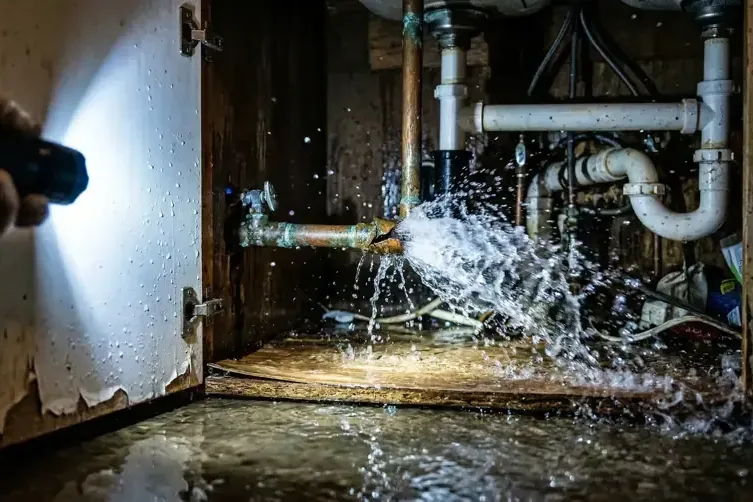
A pipe spraying into a cabinet demands different action from a bill that has gradually increased. Occupants should first describe visible water, whether it is still flowing and any nearby electrical contact.
Safe source isolation can limit further release, while an inaccessible or damaged shutoff needs qualified assistance.
The room should remain clear of people when water touches outlets, appliances or electrical equipment. A resident should never cross a wet floor to operate an uncertain control.
From a dry position, useful observations include the room name, the fixture nearest the water and whether another room is becoming wet.
Once immediate hazards are addressed, photographs can preserve the release location and the initial floor condition. Images should show the whole cabinet or wall as well as the damaged fitting.
A wider view helps the plumber and restoration technician connect the source with the material path around it.
- Describe spray, seepage or a stopped release accurately.
- Identify the nearest accessible dry exit.
- Mention wet electrical components at the start of the report.
- Avoid forcing a valve that appears damaged or inaccessible.
Give the Water Division a focused report
The municipal Water Division's work includes investigating high consumption and maintaining water mains and meters within its service area. An owner can report a water use concern with the account information and the period when the change was noticed.
Observations should distinguish an unusual bill from visible water at the property.
The city also describes repair of city owned mains and service pipes, along with meter shutoff valve work. If the concern involves that equipment, its location and visible condition are useful reporting details.
Utility staff can direct the next utility action while the owner arranges assessment of wet building materials.
Temple Terrace drinking water is supplied through wells and treatment plants. The Hillsborough River belongs to the city's flood context, while a household supply leak requires attention to the actual water system and component.
Keeping those subjects separate makes the initial conversation more precise for everyone handling the loss.
- Have the relevant water bill available.
- State when the consumption change was first noticed.
- Describe visible meter-area water from a safe position.
- Retain the utility contact reference with the project notes.
Let plumbing findings identify the source
A plumber can examine the affected fixture, fitting or concealed pipe and determine what source correction is needed. The owner should ask for the component location and repair description in writing.
That information gives the cleanup team a reliable starting point for tracing the release through nearby finishes.
The burst pipe cleanup service addresses water that escaped into the building. Its work can proceed in coordination with plumbing access, but the material record should identify what was wet outside the repair opening.
A successful pipe repair still leaves the floor, wall and contents assessment to be completed.
Before a removed component is discarded, the owner should ask whether photographs or retention are needed for the project record. A clear image of the failure location and the plumber's findings can explain the source later.
The owner should follow professional instructions for handling damaged parts rather than disturbing a pressurized assembly.
Follow water away from the fitting
The most obvious spray location may be only the beginning of the material damage. Water can collect behind a cabinet, travel through a floor joint or reach the room on the other side of a partition.
The inspection should follow those connected surfaces and document where moisture continues.
Technicians can mark affected areas while extracting accessible liquid. If the original release occurred above another room, the lower ceiling also belongs in the assessment.
Notes should connect each added area to an observed water path or measurement so the owner can understand why the work extends beyond the plumbing repair.
Contents inside the cabinet deserve their own attention. Wet packaging, stored papers and porous items can obstruct access and retain moisture against the assembly.
The crew should agree on what can be safely moved, where it will go and how damaged belongings will be documented before removal.
- Inspect adjoining cabinet sections and floor edges.
- Check the reverse side of a wet partition.
- Include the room below an elevated release.
- Record contents separately from building materials.
Plan openings without losing the record
Access for plumbing and access for drying may occur in different places. The pipe opening gives the repair contractor a route to the failed component, while another opening may expose trapped water in a wall base.
Each should be photographed and labeled with its purpose before the repair work conceals the original condition.
The contractor handling source repair should confirm applicable municipal requirements for that repair scope. The city provides online permitting functions including inspection scheduling and results.
Keeping those records with the plumbing documents helps the owner see what remains to be completed before the source work is closed out.
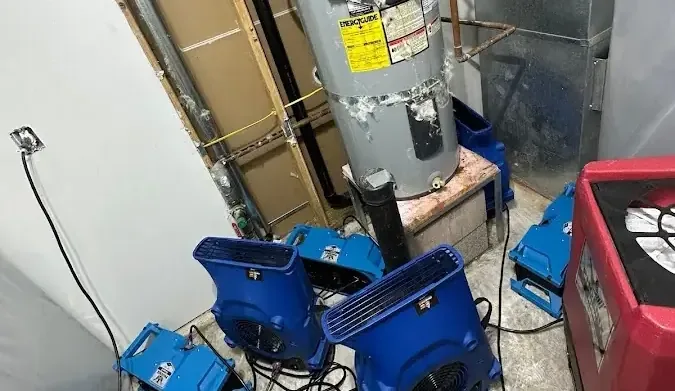
For the building assembly, structural drying depends on access to retained wet material and repeated assessment. The crew should explain where equipment will operate and which openings must stay available.
Reconstruction can then be scheduled around both the source repair and the material recovery.
Compare progress at the same locations
A measurement log becomes useful when it returns to identifiable material points. The floor beside a cabinet toe space, the lower wall behind it and the ceiling below represent different parts of the release.
Tracking them individually helps reveal a pocket that responds more slowly than the rest of the room.
The owner can ask what prompted a change in equipment or access. An adjustment might follow newly exposed moisture or improving conditions in a completed area.
Recording the reason gives the next visit a clear starting point and prevents the project from becoming a list of unexplained equipment moves.
Utility followup may continue while indoor work progresses. Any reported change in consumption should remain attached to the utility or plumbing record, while building readings remain in the drying log.
The combined folder then shows what corrected the release and what restored the affected assembly.
- Use room names consistently across reports.
- Mark repeat measurement points in photographs.
- Document a renewed drip or unexpected wet area.
- Keep equipment interruptions visible in the work notes.
Close the leak with a complete handoff
Before finish work starts, the owner should have the source repair description, remaining inspection tasks and the drying outcome for each affected area. The repair contractor needs to know which cabinets, trim sections or flooring edges were disturbed.
This avoids discovering an undocumented opening after materials have already been ordered.
The restoration coverage page helps identify the local communities served. For an active project, the important contact list is specific to the loss: utility staff when involved, the plumber, the mitigation contact and the finish contractor.
Each should have a clearly identified task or remaining question.
A final walkthrough can confirm that contents are accounted for and access restrictions are understood. The written handoff should name any unresolved source observation or material concern that needs another visit.
That gives the homeowner a practical next action instead of relying on the disappearance of the original puddle.