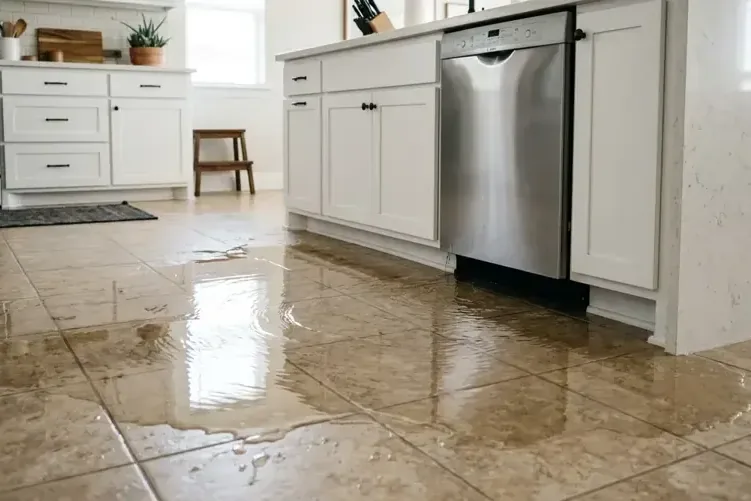
Hillsborough County recommends checking toilets, faucets, water softeners and irrigation when a leak is suspected. Its guidance notes that a softener stuck on backflush continually uses water. For a Valrico homeowner, an unexpectedly high reading and a puddle beside an appliance call for different observations, followed by source correction and careful attention to any building materials that became wet.
Key takeaways
- Describe consumption changes separately from visible indoor water.
- Avoid operating a leaking appliance again to reproduce the problem.
- Use the county meter comparison only when conditions are safe.
- Have the repair technician identify supply water or discharge.
- Inspect cabinet bases and floor layers reached by the release.
Decide which symptom needs immediate attention
A wet kitchen floor needs a safety assessment before an owner starts investigating bills or controls. Electrical contact, slick surfaces and water entering another room should be reported first.
A resident can keep people out of the affected area while arranging repair and cleanup through a dry access route.
A consumption concern without visible indoor water calls for a more methodical source check. The county list includes fixtures, water softeners and irrigation, so the investigation should account for uses beyond the appliance nearest the meter.
The owner can assemble recent observations without running a suspect machine through another cycle.
When both symptoms occur, write them down separately. The time a puddle was discovered, the machine's operating state and the period of unusual consumption may help the technician.
A clear sequence is more useful than assuming every change began when the floor first looked wet.
- Note whether water is still appearing.
- Keep wet appliance controls untouched.
- Record the last known operating cycle.
- Describe any water outside the appliance room.
Make the meter comparison meaningful
The county describes comparing meter readings while household water use and irrigation are stopped as a leak check. For the comparison to be useful, the owner should account for equipment that uses water automatically.
A dishwasher, washer or softener operating unnoticed can change what the meter observation means.
Meter access must remain safe and unobstructed. A homeowner should leave damaged equipment, flooded surroundings or an inaccessible shutoff to the appropriate professional.
The observation is a starting point for locating unexpected use, followed by a technician's assessment of the system and any visible damage.
Write down what was turned off and whether any automatic equipment was still operating. That detail helps a plumber repeat or interpret the check.
If visible leakage is active inside, source control and protection of the building take priority over extending the comparison just to collect another reading.
- Account for irrigation before comparing readings.
- Identify appliances with automatic water cycles.
- Record the conditions under which readings were observed.
- Share the result with the plumber handling source diagnosis.
Explain what the appliance was doing
A machine can release water during filling, circulation, draining or an idle period. The owner should describe the last observed activity and where the puddle first appeared.
The technician can then inspect the relevant connections and components without relying solely on the final location of water across the floor.
County guidance identifies continuous water use from a softener stuck on backflush. That operating problem belongs in the service conversation even if the surrounding room is dry.
If water has escaped onto finishes, the appliance leak cleanup team also needs to know which components the repair technician found affected.
A supply connection and a discharge route can require different cleanup decisions after water reaches the building. The technician should identify the release rather than the owner making that classification from appearance.
Clear water in a photograph still needs a source history and an assessment of the materials it contacted.
Inspect the spaces the appliance hides
The puddle in front of a dishwasher may leave the cabinet beside it looking deceptively untouched. Water can occupy a toe space or reach flooring beneath the unit where routine wiping cannot reach.
The crew should assess those connected spaces before concluding that a dry visible tile surface represents the whole loss.
Moving the appliance requires control of electrical and plumbing connections. An owner should avoid pulling a wet unit into the room or disconnecting unknown fittings.
Coordinated access by the repair technician and cleanup crew allows them to photograph the concealed condition and plan the necessary material work.
Cabinet contents should be sorted carefully when water reaches stored items. Dry dishes or containers can go to a clean area along a safe route, while damaged packaging and wet porous contents need assessment.
The cabinet itself should be documented before shelving or panels are removed for access.
- Check the toe space beside the machine.
- Inspect adjoining floor transitions.
- Record swollen panels or separated cabinet joints.
- Plan a clean place for safely removed contents.
Give each affected layer a recovery plan
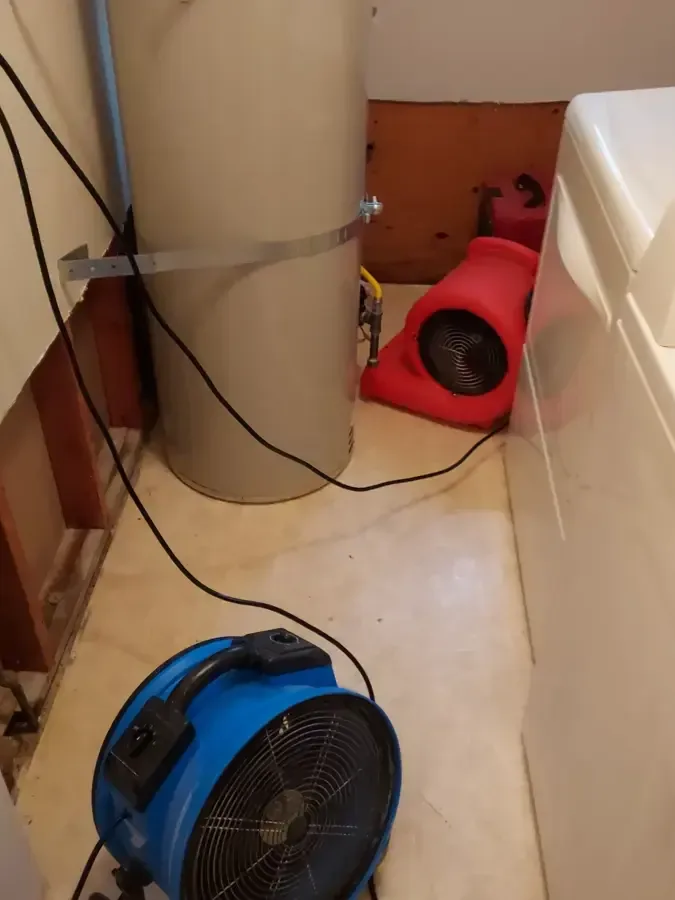
An appliance repair can stop the source while the surrounding finish continues to hold moisture. The crew should identify the wet cabinet sections, flooring and wall base, then explain which materials can be retained.
A visible puddle boundary is useful for the first assessment but should expand when inspection exposes additional wet layers.
After liquid removal and required cleaning, structural drying can address the retained assembly. The setup needs access around cabinets and a way to revisit the wettest points.
Furniture or stored boxes should stay clear of those points so progress can be measured consistently.
Some finish repair may need to wait until the drying outcome is documented. Reinstalling a toe panel or pushing the machine back against a wet wall too early can obstruct further assessment.
The owner should ask which openings must remain accessible and who will authorize the final return of the appliance.
Organize service and water account paperwork
The appliance invoice should describe the failed component and the correction performed. Cleanup documents should describe escaped water, affected materials and recovery work. Keeping both in the same folder helps explain the sequence while allowing each contractor's work to remain identifiable.
The county allows customers to request a leak adjustment review after a plumbing leak is repaired. A customer considering that process should retain the repair documentation and consult the account's applicable instructions.
The appliance diagnosis can help clarify whether the work involved the plumbing leak described in that request.
The service coverage information places Valrico within the site's local area. During a loss, use the property's room names and appliance descriptions on every invoice and photo label.
That practical detail makes a kitchen cabinet record easier to connect with the matching repair and drying notes.
- Keep the original problem description with the repair invoice.
- Store meter observations separately from moisture readings.
- Retain disposal decisions for damaged contents.
- List any remaining cabinet or flooring work.
Restore use in a planned sequence
Returning a repaired appliance to operation should be coordinated with the technician and the condition of the surrounding room. Connections, access panels and retained finishes each need their own completion status.
The homeowner should understand whether the machine can be used while nearby reconstruction remains unfinished.
A controlled return also creates an opportunity to observe the previously affected area. The owner can report fresh water or another unexplained operating change promptly without moving equipment or dismantling cabinetry.
Any renewed symptom should be documented with the activity occurring when it appeared.
Closeout should leave a practical record of what was repaired, what was dried and what remains cosmetic work. The owner should be able to identify the contact for a mechanical problem and the contact for a material concern.
That distinction keeps later followup focused and reduces confusion after the room returns to everyday use.