Commercial Water Damage in Tampa
A wet business floor affects more than the room itself. Managers need a defined work area, a safe access plan and a restoration sequence that accounts for equipment, stored goods and neighboring occupied spaces.
(888) 621-2041Discuss the affected business space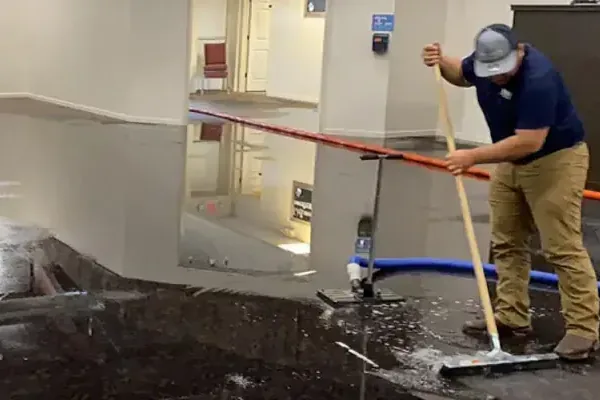
What to do the moment you find commercial water damage
- Name the property contact
Identify who authorizes access, contents decisions and tenant coordination. A clear contact helps resolve building questions without delaying source control.
- Restrict the affected workspace
Keep staff and visitors away from wet electrical equipment, slippery flooring and unstable finishes. Safe paths should be established before routine movement resumes around the area.
- Record business property exposure
List wet stock, documents and equipment without operating or relocating unsafe items. Their condition and handling needs should be assessed alongside the building damage survey.
- Describe essential access needs
Report shared entrances, occupied neighboring rooms and required utility access. These details help organize equipment placement and work boundaries around the property's actual use.
How commercial water damage is handled in Tampa
Wet customer facing areas
The scope considers public access, flooring condition and adjacent finishes. Safe boundaries separate restoration activities from the routes needed by staff and visitors outside the affected zone.
Water in occupied suites
Room connections and shared building construction are checked where water may pass beyond tenant boundaries. Management coordination provides access to the source and affected neighboring spaces before finishes are repaired.
Storage and contents exposure
Wet goods, files and equipment receive documented handling decisions. Relocation routes should avoid blocking drying access or transferring affected materials into previously dry occupied areas.
Retained commercial interior materials
Flooring, partitions and accessible cavities are assessed for removal or drying. Material readings give managers a clearer account of progress than surface appearance and support planning for the separate finish repair work.
What does commercial water damage cost in Tampa, FL?
Commercial restoration costs in Tampa depend on the affected floor area, material layers, access arrangements and contents handling. The estimate should describe equipment and monitoring needs, identify any restricted work areas and separate restoration tasks from source repair and business property replacement.
A contained room with little contents disruption can need focused extraction and drying alongside straightforward source repair coordination.
$1,000 to $3,000Adjoining wet suites add equipment, contents handling and access requirements for measurements throughout the affected building areas.
$3,000 to $7,000Extensive construction damage or contamination increases removal, protection and drying work before the premises can progress toward reinstatement.
$7,000 to $10,000+Every loss is priced on its own scope. Run the numbers in the water damage cost calculator for a planning range.
The commercial water damage process, start to dry
- 1
Establish authority and boundaries
The visit identifies the decision maker, source and wet areas. Hazards and occupancy needs establish equipment and contents handling routes.
- 2
Document rooms and contents
The survey separates construction damage from business property exposure. Material readings, photographs and item records support a scope that management can use to coordinate restoration and other responsible parties.
- 3
Perform staged removal and drying
Accessible water is extracted and necessary material work creates drying access. Equipment placement follows the affected construction while preserving the agreed routes and boundaries around neighboring occupied spaces.
- 4
Report readiness for reinstatement
Progress records explain which materials have reached completion and which tasks remain. The handoff identifies source repairs, finish replacement and contents decisions that management must coordinate before normal use resumes.
Commercial water damage restoration in Tampa needs a work plan that managers can use for decisions about people, property and access. A wet reception area, storage room or occupied suite each presents different operating concerns. The assessment should define the affected construction and explain how restoration activity will interact with the rest of the premises.
Start with the building's use and connections
Old Hyde Park Village contains retail and service establishments, while Downtown Tampa includes mixed use high rises. Those settings make access coordination an essential part of the conversation. Historic Hyde Park also has access to Bayshore Boulevard. At the affected business, the useful details are the tenant boundaries, source location and any shared spaces reached by water.
Separate contents decisions from building drying
Stock, documents and powered equipment need appropriate assessment before relocation. Moving wet goods into another occupied space can obstruct access or spread contamination. A contents list should record the item, its condition and who will decide its treatment, while the building scope addresses flooring, walls and enclosed materials.
- Identify an authorized property contact for scope decisions.
- Mark safe routes around the affected business area.
- Coordinate access to shared utilities and adjoining spaces.
- Keep contents handling records separate from construction measurements.
Make progress reporting useful to management
Room based notes and material readings help explain what remains active and what can move toward repair. Water extraction handles accessible liquid, and structural drying addresses the retained construction. The completion record should identify any separate trade work or finish replacement required so management can coordinate the next stage without relying on the floor's appearance.
A clear aisle does not resolve wet electrical equipment or unstable finishes nearby. Occupied areas, customer movement and worker routes should be agreed around the actual damage and the restoration setup.
Commercial Water Damage across Tampa, FL
Old Seminole Heights has restored bungalows, while Downtown Tampa includes residential high rises. Those settings call for different access conversations. The actual wet materials, source location and building arrangements determine the work at each property.
Related water damage services in Tampa
 Water Extraction & Removal in TampaStanding water removal targets the liquid held in floors and furnishings before drying equipment addresses moisture remaining inside the building materials and concealed edges.
 Structural Drying & Dehumidification in TampaMoisture readings determine how long wet materials need equipment. Air movement and dehumidification support drying until the affected assembly reaches its documented completion criteria.
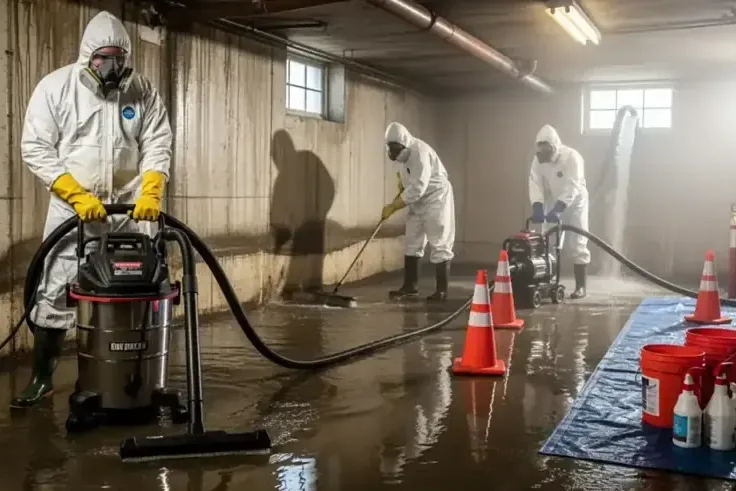 Sewage Backup Cleanup in TampaWastewater returning indoors requires restricted access and controlled removal. Affected porous materials and remaining hard surfaces need separate decisions within a contained cleanup area.
Commercial Water Damage questions in Tampa, answered
Can part of the business remain open during restoration?
That decision depends on hazards, contamination and the separation between occupied and affected areas. The assessment should establish safe routes and work boundaries with management. Equipment placement and neighboring material conditions also influence how space can be used during the work.
Who should coordinate when water crosses tenant boundaries?
Building management or an authorized property contact should organize access and communication between the affected spaces. The source and visible damage may sit in different areas. A coordinated inspection prevents isolated repairs from leaving wet shared construction unaddressed.
Should wet stock be moved immediately into another room?
The condition of the goods and the water exposure should be assessed first. A planned route avoids transferring contamination or blocking drying access. Item records should identify what was moved and who is responsible for treatment, storage or disposal decisions.
Does the restoration estimate include damaged business equipment?
The scope should distinguish building restoration from assessment or replacement of business property. Powered equipment may need specialist attention before use. Clear responsibility for those items helps management coordinate costs and prevents restoration tasks from being confused with equipment repair.
What progress information helps a property manager most?
Room based records, material readings and a clear list of remaining tasks make access and repair planning easier. Significant changes to equipment or removal scope should be explained. This gives management practical information beyond whether a surface currently looks dry.
What needs to happen before normal occupancy resumes?
Hazards, contamination and the affected materials must be addressed within the agreed scope. Source repairs and any required finish work need coordination as well. The completion record should explain the restored areas and identify outstanding tasks relevant to safe use.
Commercial Water Damage in Tampa? Call now.
Standing water keeps wicking into drywall, subfloor and framing until it is pulled out. The restoration crew serving Tampa extracts it, dries the structure to the IICRC S500 standard and records every reading for the claim.
(888) 621-2041Discuss the wet structureSeffner Water Damage Restoration
Tampa, FL
Dispatch open every hour, every day of the year
Find us on Google