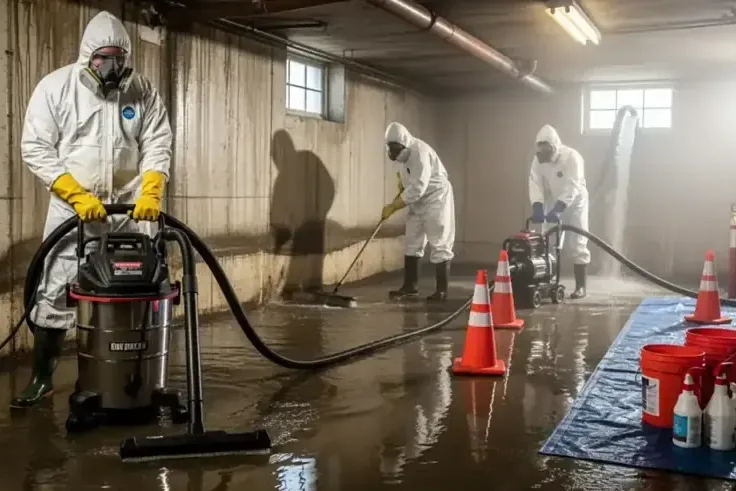
The City of Tampa Wastewater Department advises keeping fats, oils and grease out of drains and flushing only human waste and toilet tissue. When wastewater comes back through a fixture, the immediate task is to keep people clear and stop adding water to the affected drainage system. Cleanup then follows the actual contamination path, including rooms beyond the overflowing fixture.
Key takeaways
- Stop using affected fixtures and restrict access to the spill.
- Tell the plumber which drains reacted and in what sequence.
- Prevent contaminated footwear and contents from crossing clean rooms.
- Have porous materials assessed before drying begins.
- Keep drain correction and contamination cleanup records together.
Keep the first response simple
A toilet or floor drain releasing wastewater needs an exclusion area immediately. Occupants should keep children, pets and visitors out of that room and avoid walking through the spill.
A dry doorway can serve as a reporting point, but it should not become a route for carrying contaminated belongings through the house.
Additional flushing, shower use or appliance discharge can add water to an affected drainage system. The household should stop using the relevant fixtures while a plumber or appropriate utility contact directs the next action.
The owner should describe the fixtures involved rather than testing each one again to demonstrate the problem.
Electrical contact changes the urgency and method of entry. Water near outlets or plugged equipment requires qualified assessment, and residents should not reach through the spill to unplug items.
The initial call should mention those conditions clearly so the responding professionals can prepare for safe access.
- Close access to the affected room where practical.
- Tell everyone in the household which fixtures are out of use.
- Keep clean footwear away from the spill boundary.
- Mention nearby electrical equipment before arranging entry.
Describe the fixture sequence accurately
The sequence can help the plumber understand the drainage problem. An owner may have noticed a low drain rising after an upstairs fixture emptied, or several fixtures responding during the same event.
Those observations should be recorded as they occurred, without repeating the discharge to gather another example.
The city Wastewater Department's Collections Division maintains municipal gravity sewers, force mains and manholes. A concern involving public wastewater infrastructure should be reported through the appropriate municipal channel.
The indoor plumbing assessment and the cleanup team can use the owner's fixture observations while that report is being addressed.
Historic public-system notices should stay separate from the current diagnosis. September 27, 2024: The city reported flooding and overflows at Krauss Pumping Station and Bayshore Pumping Station following Hurricane Helene.
For a present backup, the useful report identifies today's affected fixtures and any current response instructions received.
- Name the first fixture where water appeared.
- Note other drains that reacted during the event.
- Retain the plumber's source findings.
- Keep municipal report details with the incident record.
Map contamination beyond the bathroom door
Wastewater can follow a floor slope, enter a hallway or wick into material touching the spill. The cleanup boundary should follow that contact rather than stop at the bathroom doorway.
Technicians need to examine floor transitions, wall bases and objects that were moved before the room was isolated.
The sewage backup cleanup service can establish controlled work areas and assess affected surfaces. An owner should identify any route already used to carry wet towels or belongings out.
That information helps the crew examine secondary contact areas instead of leaving them outside the original room sketch.
A clean staging space should remain separate from contaminated contents. The crew can designate a removal path and explain which doors or barriers must remain in place.
Occupants should ask before crossing those boundaries, even if the visible liquid has already been extracted from the center of the room.
- Include wet floor transitions in the room sketch.
- Identify objects moved before cleanup began.
- Keep the removal route separate from clean storage.
- Report any spill carried onto stairs or hallway surfaces.
Sort materials before trying to dry them
Contamination and material condition determine what can be cleaned or retained. Absorbent items can hold wastewater within layers that are difficult to reach, while durable accessible surfaces may allow a different treatment.
A professional assessment should explain the decision for each affected material instead of treating the room as a single category of belongings.
Contents photographs should show the item and its original position when safe documentation is possible. The owner can identify priorities, but handling should follow the contamination plan.
Wet boxes, fabric storage and objects resting on the floor should remain separated from clean possessions pending the crew's recommendation.
Building removals also need a clear record. If trim, flooring or a wall section comes out, the work notes should explain the contamination or access reason and show the exposed area.
That record helps the repair contractor understand the final opening without confusing cleanup with cosmetic demolition.
Move from removal to cleaning to recovery
The room needs contaminated liquid and unsuitable material removed before retained surfaces can receive the appropriate cleaning. Work should account for joints, corners and concealed spaces reached by the spill.
A clear center floor can still leave contamination around a cabinet base or beneath a finish edge.
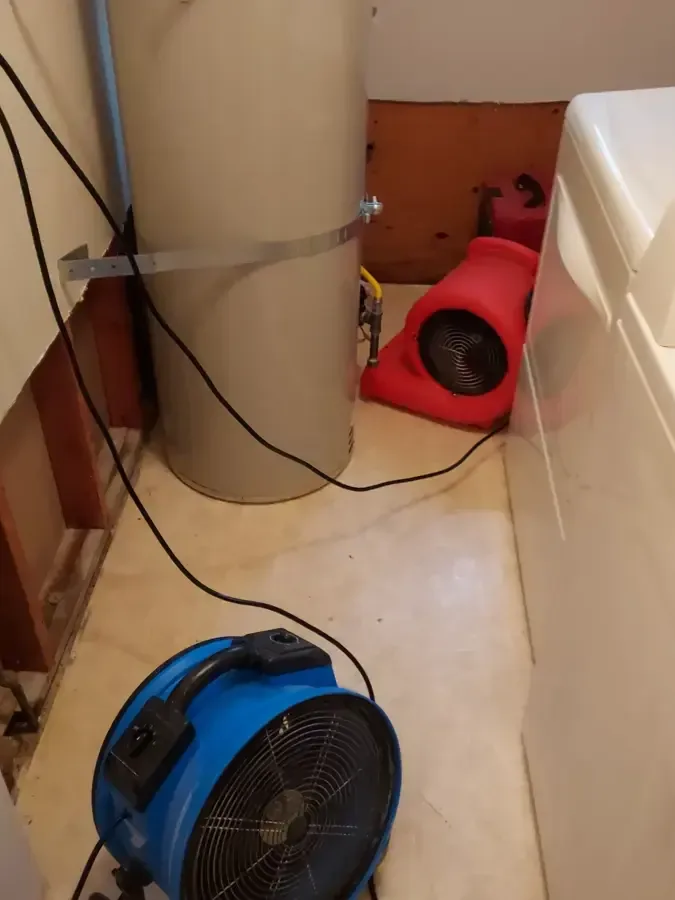
Drying equipment belongs within that organized sequence. Structural drying addresses moisture in suitable retained assemblies after the required contamination work. The crew should explain what has been cleaned, what remains open and where measurements will show material recovery during followup visits.
Residents should avoid rearranging equipment or reopening isolated areas during this process. A practical concern about bathroom access or household movement should be discussed with the crew so another arrangement can be assessed.
The solution needs to preserve both the cleanup boundary and access to the remaining wet material.
- Ask which surfaces have completed cleaning.
- Keep affected openings accessible for inspection.
- Coordinate any change in household access with the crew.
- Record the final status of retained and removed materials.
Reduce preventable drain problems after correction
The city advises residents to keep fats, oils and grease out of drains. Its flushing advice limits toilet disposal to human waste and toilet tissue.
These practical habits belong in the household handoff after a backup, alongside any source-specific recommendations made by the plumbing contractor.
Prevention tasks should be connected to the actual diagnosis. A plumber may identify a blockage, a damaged component or another condition requiring further work.
The owner should retain that finding and the recommended correction, then ask which fixtures can return to normal use and which still require restrictions.
The area coverage page describes the local restoration footprint. At the house, the more immediate reference is the drain service report paired with the cleanup record. Together they show the correction performed and the rooms that needed contamination treatment after the overflow.
- Keep cooking grease out of drain disposal.
- Dispose of wipes outside the toilet.
- Follow the plumber's fixture-use instructions.
- Schedule any unfinished drainage repair identified in the report.
Leave a clear boundary between finished and pending work
A final walkthrough should show which rooms have completed mitigation and which surfaces still need finish repair. The owner should be able to connect each opening with the recorded reason for removal.
Unfinished flooring or cabinetry should have an assigned next step rather than simply being left outside the cleanup estimate.
The contents record should also be complete enough to identify what was retained, relocated or disposed. Cleaning documents and final material observations belong with those decisions.
If another specialist is evaluating an item, the folder should name the item and preserve the pending status.
Household use can then resume according to the applicable professional instructions and the condition of the property. A recurring fixture symptom deserves prompt attention from the plumber rather than another attempt to clean around the source.
Keeping the previous report available makes that followup conversation more precise.