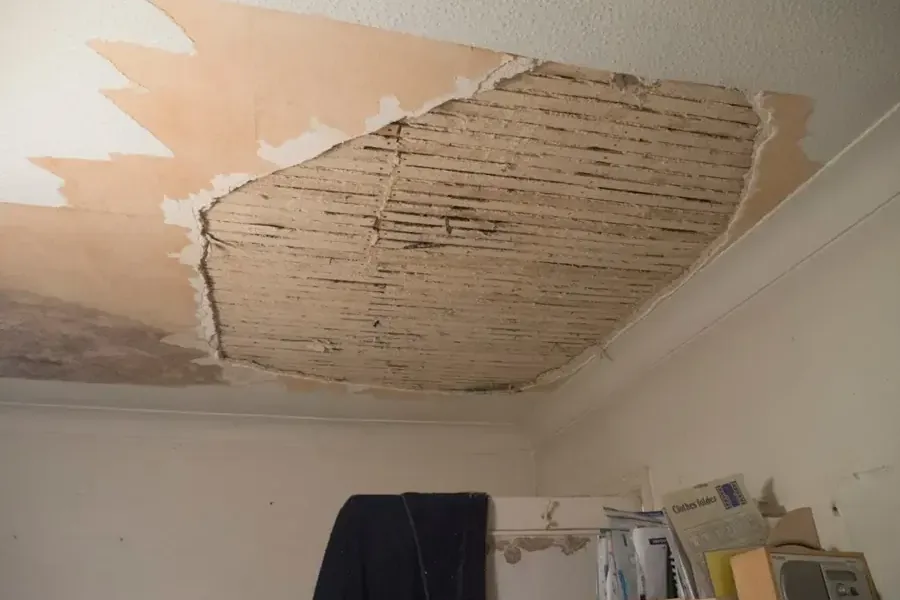
Hillsborough County identifies heavy or steady rainfall as a cause of inland flooding concerns. Inside a Seffner home, rain can also appear overhead through a roof opening and travel before a ceiling stain becomes visible. The useful response separates safe room access, correction at the roof and assessment of the insulation, framing and finishes along the water's path.
Key takeaways
- Stay out from beneath soft or sagging ceiling areas.
- Tell the contractor when dripping changes with rainfall.
- Have qualified professionals assess roof and attic access.
- Check insulation and connected cavities beyond the stain.
- Keep roof repair findings with the interior drying record.
Read the ceiling from a safe position
A ceiling with a growing bulge, loose finish or active dripping needs space beneath it kept clear. Occupants should avoid pressing on the surface or standing below it to move a container.
A photograph from a safe doorway can show the affected area without putting someone under material that may fall.
Water near a light fitting or other electrical component adds another reason to restrict access. A resident should report that contact and leave electrical assessment to qualified help.
Reaching toward the fixture or crossing a wet floor to operate an uncertain control creates a separate exposure during an already difficult situation.
The first report should describe the room, the visible ceiling condition and whether water is still arriving. Mention sounds or changes observed during rainfall without entering the attic to investigate.
These details help the responding contractors plan access and decide which hazards need attention before interior inspection.
- Keep furniture retrieval outside the sagging area.
- Report wet lighting or other electrical equipment.
- Describe whether dripping is active or intermittent.
- Use a safe viewing position for initial photographs.
Connect the drip with the weather sequence
The time relationship between rain and an indoor drip is useful to the roof contractor. An owner can note whether the stain appeared during rainfall, afterward or during a later shower.
The observation should include any room changes that might help explain when the interior material became visibly affected.
Photographs taken from the same safe position can show the stain's expansion without requiring contact with the ceiling. Keep them in order and include a wider view showing the wall and room layout.
A close image of discoloration becomes much more useful when the contractor can locate it within the building.
The roof leak water damage service can coordinate interior assessment with source findings. The roofer's description of the opening or damaged detail should remain in the project record. That finding connects the exterior correction with the materials inspected below it.
- Note rainfall activity when water first appeared.
- Retain images showing changes in the same ceiling area.
- Record any previous repair relevant to the observed location.
- Ask for a written description of the roof source correction.
Follow the route above the visible stain
Water entering a roof assembly can move along framing or other surfaces before reaching the room below. The ceiling stain is therefore an inspection starting point, followed by the connected cavity and accessible attic materials.
Qualified access is important because the roof opening and the visible drip may occupy different positions.
Insulation can obstruct the view of affected surfaces and retain moisture within the assembly. The inspection should identify where that material is wet and what handling is needed.
The owner should avoid moving it personally or stepping onto unfamiliar attic surfaces to search for the roof opening.
A room sketch can show the stain, the inspected overhead area and any adjacent wall that became wet. When the investigation discovers another affected pocket, photographs should connect it to the original route.
This makes an expanded interior scope easier to understand than a list of unrelated ceiling openings.
Choose access that serves the actual assembly
A controlled opening may be necessary to remove unstable finish, reach saturated insulation or assess concealed material. The contractor should explain its purpose before work begins whenever conditions permit.
Photographs of the original surface help preserve the starting condition for the owner and the eventual repair trade.
Ceiling and roof contractors have different access needs. Exterior correction addresses the entry opening, while interior access may extend to another part of the ceiling where water accumulated.
Keeping those tasks coordinated can reduce confusion over which contractor created an opening and who will close it after the material work is complete.
Ceiling water damage assessment also considers adjoining surfaces and the safe handling of weakened finish. The work record should identify each removed material and the retained layers still being monitored.
An opening should remain available for the agreed checks before new finish conceals the assembly.
- Identify the purpose of every ceiling opening.
- Photograph exposed framing and insulation condition.
- Keep electrical work separate in the contractor record.
- Assign the final finish repair to a named project contact.
Dry retained materials with the roof source addressed
The drying plan needs a clear status for the original rain entry. Continuing roof leakage can rewet material that has already begun to recover, so the crew and roofer should communicate about source work.
The owner should retain any temporary protection instructions and report renewed dripping promptly.
For suitable retained layers, structural drying follows material measurements rather than the stain's color. A ceiling surface can look unchanged while conditions above it improve, or look dry while another pocket remains wet.
Repeatable locations give the crew a way to explain that progress.
Equipment should be placed to support the accessible affected assembly and maintain safe room circulation. Occupants should keep the agreed openings clear and avoid altering the setup to make space.
A practical access concern can be resolved with the technician while preserving the intended drying conditions.
- Record whether the roof source has been corrected.
- Report any fresh drip after protective work.
- Keep drying access clear of stored contents.
- Ask which retained surfaces are still being measured.
Plan paint and finish work after the handoff
Painting a stain or patching an opening should follow the contractor's assessment of the retained material. Covering the area too early can hide a useful inspection point and complicate followup if water appears again.
The owner should request a clear statement of what is ready for finish repair.
Replacement work may involve more than the visible ceiling face. Trim, insulation and adjoining wall finish should appear in the repair scope when they were affected or removed.
Using the same room labels as the mitigation file helps the repair contractor compare the proposal with what remains exposed.
Seffner's residential landscape has expanded through subdivision growth. At the individual home, the repair plan should follow the assembly actually uncovered during the job.
Photographs and material descriptions let the next trade prepare for those conditions instead of choosing a repair approach from the neighborhood name alone.
Keep a concise record for the next rainfall
The owner should retain the roofer's source description, interior damage photographs and drying closeout together. If another stain appears later, those records help distinguish the new observation from the area already repaired.
A room sketch with the original ceiling location can be especially helpful after painting removes the visual mark.
Any followup observation should describe the current weather and the precise room condition. The homeowner can photograph a new spot from a safe location without entering the attic or opening the ceiling.
The responsible contractor can then assess whether further source investigation is needed.
A completed project should leave clear contact details for roof concerns and interior repair questions. The handoff should also identify any unfinished task that could affect access or conceal an inspection point.
That practical record gives the household a useful starting place if an overhead water problem returns.