
July 14, 2025: Heavy rainfall flooded roads and yards in Plant City, including East Trapnell Road in the Howell Branch Creek area. For a business facing floodwater, the recovery plan must account for access, inventory and the building itself. The most useful reopening discussion begins with a room assessment and a clear division of responsibility among the owner, tenant and cleanup crew.
Key takeaways
- Confirm safe access before sending staff to retrieve stock.
- Separate customer routes from cleanup equipment and affected rooms.
- Document inventory before disposal or relocation.
- Track each room's cleaning, drying and repair status.
- Approve reopening through the people responsible for building safety.
Establish who can authorize the work
A flooded business may have a tenant, property manager and building owner involved in different decisions. The cleanup crew needs to know who can approve access, contents handling and openings in the building.
Establishing those contacts early helps prevent a wet room from sitting untouched while instructions pass between people.
The initial report should identify the affected suite or work area, whether water is still entering and whether anyone remains inside. Electrical equipment, overhead damage and contaminated surfaces affect entry decisions.
Staff should remain outside restricted rooms until the responsible professionals have assessed conditions and established a safe work route.
A written contact sheet can identify the person handling building repairs and the person handling stock or business records. Add an alternate contact if the primary decision maker will be unavailable.
This practical arrangement matters when the crew finds concealed damage that requires another authorization before work can continue.
- Identify the building access decision maker.
- Name the person authorized to approve contents handling.
- Describe alarm or entry arrangements without exposing security details.
- Keep staff informed about restricted rooms.
Divide the premises into useful work areas
The commercial water damage service can map affected areas by their actual function. A stockroom, public counter and office may need different handling even when water crosses the same floor.
The room plan should show where cleanup occurs and where unaffected contents can be protected.
Customer access needs a separate assessment from the crew's equipment path. Hoses, cords, wet floor edges and temporary barriers can make an otherwise dry doorway unsuitable for normal use.
Any proposal to operate from an unaffected room should be coordinated with the people responsible for the premises and applicable safety requirements.
Plant City's Downtown Commercial District is listed on the National Register of Historic Places. In an established business interior, documenting existing finishes before access is particularly useful for planning later repairs.
The contractor should record the actual wall, trim and floor layers encountered at the affected premises.
- Mark affected rooms on a simple floor sketch.
- Keep public circulation away from the work route.
- Choose a protected staging area for dry inventory.
- Identify shared doors and passages before equipment arrives.
Make inventory decisions traceable
Wet stock should be recorded by item type, storage location and observed condition before it leaves the room. Photographs of shelves and packaging can explain how water reached the items.
The business should retain its own inventory references alongside the cleanup images so the two records remain easy to connect.
Porous packaging, electronic equipment and durable fixtures may require different handling specialists or decisions. The cleanup team should identify what it can assess and which items need another qualified party.
Staff should avoid switching on wet equipment or transporting affected stock through a clean sales area without an agreed plan.
An owner may prioritize records, essential tools or items needed for continued operations. Those priorities help organize retrieval, but safe access and contamination control still govern handling.
A short written decision for retained, relocated or disposed items avoids confusion when several employees are helping document the same stockroom.
- Photograph shelf positions before moving stock.
- Keep business inventory identifiers with item images.
- Separate dry stock from affected packaging.
- Record who approved disposal or specialist handling.
Connect outside conditions with the interior schedule
The reported July flooding included roads and yards, illustrating why a business recovery schedule must consider the approach to the property. A crew needs usable access for equipment and removal of damaged materials.
The owner should report blocked approaches and follow current official restrictions rather than asking staff to cross floodwater.
Plant City operates stormwater systems that carry runoff toward canals, lakes or rivers. An observed outdoor obstruction can be reported to the appropriate municipal contact while the building team addresses indoor conditions.
The current water approach and entry points should be documented together so any renewed inflow can be identified.
The cleanup schedule may need adjustment when safe access changes or rainwater continues entering. A dated job note should explain the condition and its effect on the planned work.
That note gives a business owner a concrete basis for communicating delays without making an unsupported promise about reopening.
Recover the building in measurable sections
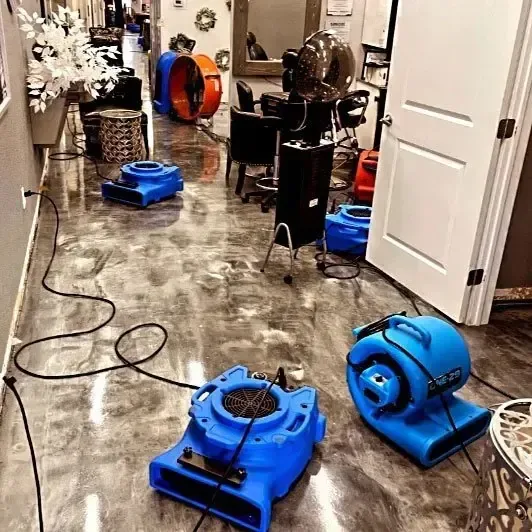
Once access and source conditions permit work, crews can remove water and assess cleaning needs across the affected rooms. Floodwater contact, material integrity and access determine which finishes can remain.
The owner should receive the reason for removals and photographs showing what was discovered behind any opened surface.
Structural drying then follows the retained material rather than a single completion date for the whole business. A partition, floor assembly and fixed counter may respond differently.
Keeping their readings identifiable lets the crew explain why one work area is ready for repair while another still needs treatment.
Equipment placement must also accommodate building operations that remain safe and authorized. The crew should coordinate access for inspections and essential maintenance without losing its measurement locations.
Any interrupted power or relocated drying device belongs in the log because it changes the conditions under which recovery is being assessed.
- Assign room labels to moisture records.
- Record the reason for each material removal.
- Keep inspection routes available by agreement.
- Document equipment interruptions and layout changes.
Set reopening decisions by room condition
A clear floor and an empty equipment area are only part of a reopening decision. The responsible parties must also consider cleaning, electrical safety, finish stability and any unfinished repair.
The business owner should ask which areas have completed mitigation and which remain restricted for another trade or inspection.
The local coverage page identifies the communities supported by the site. Within the property, a room status sheet is more useful than a broad declaration that the building is finished.
It can distinguish a repaired office from a stockroom awaiting shelving or flooring work.
Staff instructions should match that status sheet. Employees need to know which doors to use, where inventory has moved and which surfaces must remain undisturbed. A documented handoff helps preserve completed work when normal business activity begins to return around unfinished areas.
Retain a recovery file that another manager can use
The final folder should tell a replacement manager what happened without requiring the original participants to explain every photograph. Include the water entry record, room sketch, inventory decisions, contractor findings and remaining work list.
Use the same room names across those documents so the sequence remains understandable.
Separate building repairs from the business's operational decisions. A cleanup contractor may document retained materials and final readings, while management decides when stock and staff return under the applicable safety requirements.
Keeping those responsibilities explicit helps later questions reach the person who made the relevant decision.
A closing walkthrough should confirm that affected contents have a recorded destination and that unfinished openings are assigned to a repair contractor. The owner should retain before and after photographs as part of that handoff.
A business can then move forward with a concrete repair schedule and a usable record of recovery.